

The European Chafer is a newly established pest in western Washington and Oregon, having appeared within the past two years. This beetle causes significant damage to turf during its larval (grub) stage. The larvae feed in the root zone, reaching up to the root crowns during mid-summer.
Beyond the direct damage from feeding, heavy infestations can attract secondary pests such as birds, raccoons, and skunks. These animals peel back the turf to feed on the grubs, leading to rapid and severe damage, as demonstrated in the picture below from last summer at a property we manage in the Seattle area.
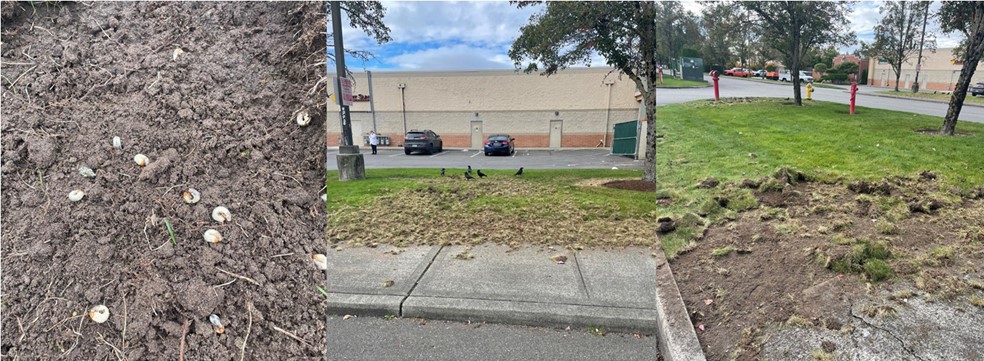
We Are Training Our Staff To Identify, To Treat, To Reduce Damage
When to Inspect for Damage
- • We will closely monitor in May & June as temperatures rise as there is a short feeding period before the grubs pupate and turn into adults.
- • During August through November as the larvae grow, they will feed on root systems. Again, we will be monitoring to look for any visible signs of stressed turf that may appear as drought stress but are actually damaged roots.
- • The most visible damage is caused by secondary pests such as birds, racoons, skunks, opossums, etc. This is what we hope to avoid.
Treatment to Control Grubs
- • We have been consulting with our product suppliers and have several options for treatments depending on which stage the grub is in.
- • Since it is spotty, we do not believe it warrants site wide preventative control.
- • We will monitor and when activity is spotted, propose treatment.
- • This will likely be followed by a preventative treatment the following spring.
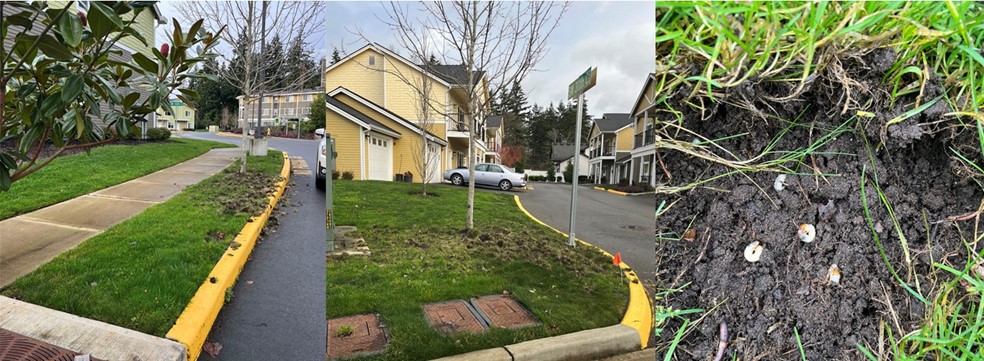
European Chafer Identification Guide
Adult Beetle
- Light brown color
- ½ inch long
- Active June-July
- Swarm at dusk
- Do not feed on plants
Grub Stage
- White C-shaped larvae
- ¾ inch when mature
- Visible raster pattern
- Feed on grass roots
- Most damaging phase
Damage Signs
- Brown, dying patches
- Turf easily pulls up
- Spongy feel when walking
- Animal digging damage
- Appears similar to drought
Each year, we see new pests in the PNW. European Cranefly, Bronze Birch Borer, Emerald Ash Borer, Crabgrass, and now the European Chafer are pests we need to monitor and manage. Why are we seeing these new pests? It could be due to climate change or simply the natural spread of species. Regardless, we will be monitoring and recommending treatment as needed. While we prefer not to treat for pests, those that can damage or potentially kill landscape plants will be carefully monitored and treated when necessary.