


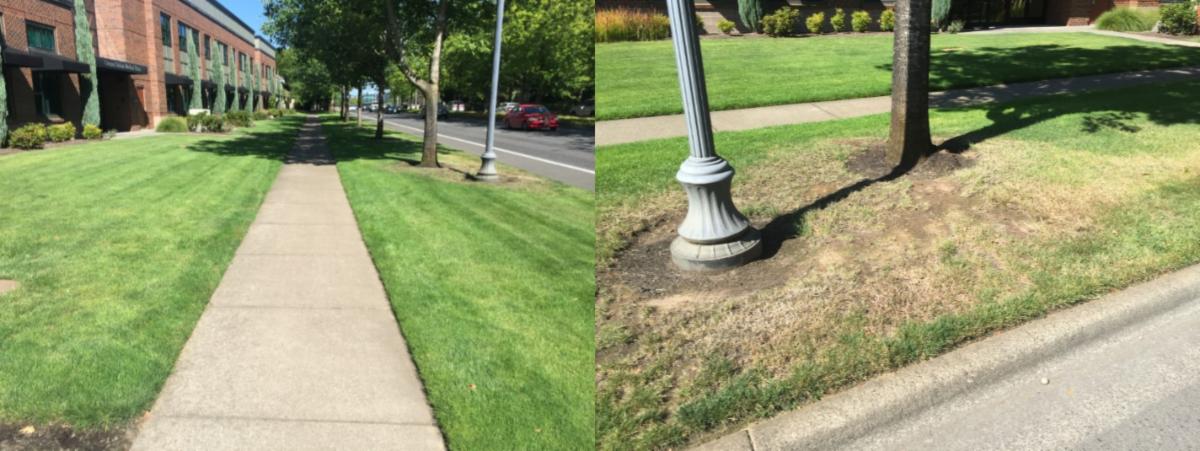
Shouldn't all irrigated lawns be green? Yes and no. Take the pictures above. The picture on the left is the entire lawn and the picture on the right is a small piece of the same lawn. This is typical of almost all lawns, especially those with established trees.
In a perfect world, irrigation would provide a 100% green lawn. The problem is that different parts of a lawn have different soil profiles and water needs. Gravel buried under the soil, tree roots, slopes, and reflected sun and shade can all vary the irrigation need and create wet and dry spots on the same lawn with the same irrigation program. Adjusting the sprinklers can help but often times, it is unavoidable.
Historically, we watered more to compensate for those hard to water areas. As water costs have increased, we have worked to lower irrigation to save our customers money. The bad news is that the result are a few dry spots on most properties. The good news is that allowing a few dry spots can reduce water costs 20-40%. This is where Weather based irrigation come into play.
Weather based irrigation adjusts the controller daily based on the weather. However, whether it's inconsistent soil, hidden construction debris and gravel, or mature tree roots in the soil below, all create differential water needs and make some areas difficult to water regardless of how much is applied. Weather based irrigation is great for reducing water usage, but quickly points out the places where the landscape or system is flawed.
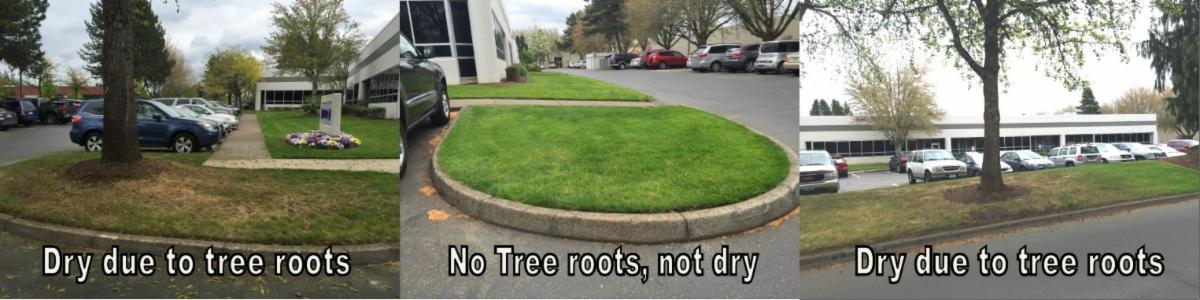
Why is lawn where it shouldn't be?
The simplest answer is that lawn is the cheapest part of landscape installation and when brand new, looks great. New lawn on freshly prepared soil looks great. Parking strips and parking islands are probably the worst place for lawn. There is concrete or asphalt on most or all sides, often times the soil is shallow or there is rock or asphalt below, irrigation coverage is difficult due to small odd shapes, and as tree roots develop, they compete for moisture. We believe that parking strips and islands may take as much as 5-10 times as much irrigation to maintain. A bad combination in which to grow and maintain lawns. In addition, these areas are difficult and sometimes dangerous to maintain due to nearby cars and obstacles.
SAVE WATER AND IMPROVE THE LOOK
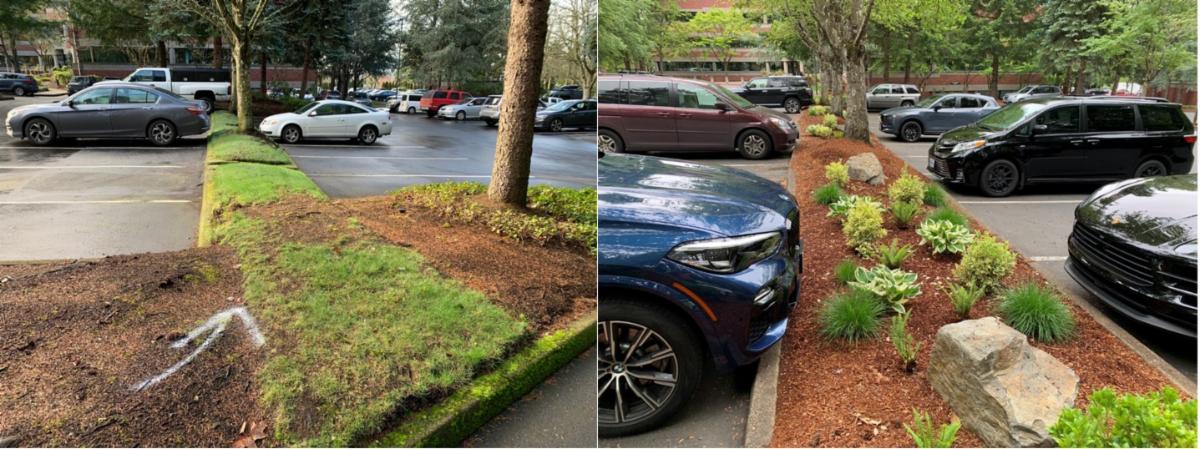
What are the Alternatives?
There are lots of options. Replacing lawn with just bark dust or some sort of groundcover are both options. We believe that parking strips, parking tips, and parking islands are a bad place for lawn. Hard to irrigate and hard to mow. We are proposing to most clients a long term strategy of lawn conversion in these areas.
ROCK ON!
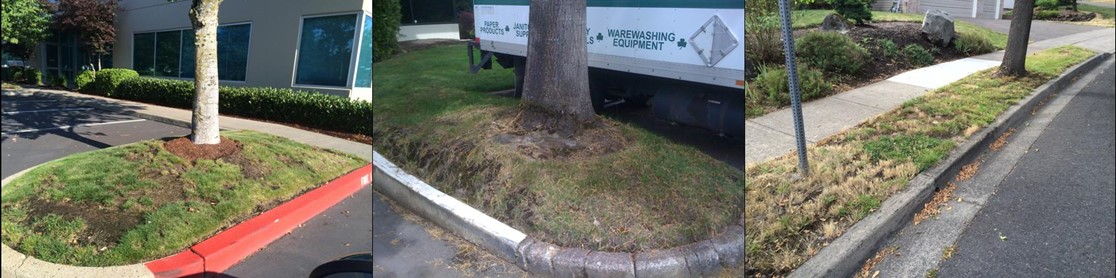
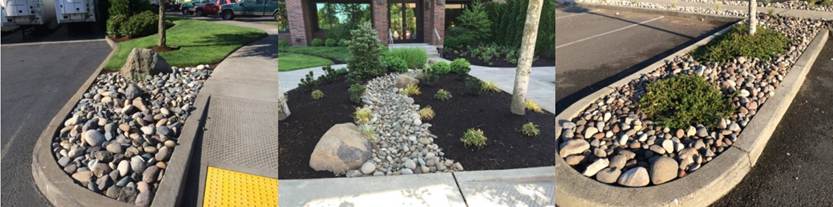
We are also using rocks as a great alternative. Rocks need no water and can be an attractive element as a part of lawn conversion.
Key Benefits of Lawn Conversion
20-40% Water Savings
Reduce water costs by allowing strategic dry spots
Safer Maintenance
Eliminate dangerous mowing near cars and obstacles
Zero Water Need
Rocks never die and require no irrigation
Problem Areas for Lawn
- Parking strips and islands
- Areas surrounded by concrete/asphalt
- Shallow soil conditions
- Hidden construction debris
- Competing tree roots
- Difficult irrigation coverage
Better Alternatives
- Decorative rock landscaping
- Bark dust groundcover
- Drought-tolerant plants
- Native groundcovers
- Attractive hardscaping
- Low-maintenance solutions